
Retail investors have put at least Rs 2,296 crore in listed companies facing proceedings under the Insolvency and Bankruptcy Code (IBC). A median such-company had 16,163 retail investors as shareholders many of whom apparently have bought a stake on the hope of making money if the firm revives. They own a fifth of the total stake in the companies under consideration. The analysis looked at 75 listed firms for whom shareholding data was available for March 2022.

Logistics services provider Delhivery is likely to launch its downsized initial public offering (IPO) this week, said people in the know. The Softbank-backed firm may trim its issue size from Rs 7,460 crore to Rs 5,500 crore to align with the volatile market conditions, sources said. Sources added the fresh issue component of the IPO could be reduced to Rs 4,500 crore and the OFS component to Rs 1,000 crore.

Many years during which monsoons were poor saw high returns, while normal or excess rainfall has also coincided with poor calendar year gains.

The outbreak of the Omicron variant of the coronavirus and unprecedented lockdowns in China have roiled its equity market and also that of Hong Kong. After the crisis-hit Sri Lanka, China and Hong Kong are the worst-performing stock markets in Asia on a year-to-date basis.

LIC's $2.7-billion initial public offering (IPO) shall be the fifth-biggest globally in CY22. South Korean EV battery maker LG Energy Solution holds the record for the year's largest IPO at $10.8 billion, while Chinese mobile communications provider China Mobile IPO, which raised $8.6 billion, comes second. Dubai Electricity and Water Authority's (DEWA's) $6.1-billion IPO in March is currently the third biggest public offering for the year, followed by China National Offshore Oil Corporation's (CNOOC's) IPO; the firm had raised $5.1 billion by issuing shares in Mainland China after delisting from the American bourses.

Domestic capital market will see the launch of India's largest-ever initial public offering (IPO) next week. Life Insurance Corporation of India's (LIC's) landmark Rs 21,000-crore IPO will open for subscription on Wednesday. Here's a look at some unique features of this mega offering, which are not typically seen in other IPOs.

Indian issuers are borrowing lesser through bonds compared to their global peers. The total value of bond issuances was down 10.1 per cent on a rolling 4-quarter basis in March 2022, compared to a similar period in March 2019, shows an analysis of data from tracker Refinitiv, a London Stock Exchange Group (LSEG) business. The four quarters ended March 2019 marked the last full financial year before the pandemic took hold.

A sudden surge in wealth because of stock market gains after the pandemic could be one of the factors behind the relatively lower share of philanthropy in total wealth.

Experts say companies wanting to launch IPOs will have to scale back their expectations given the fall in valuations.
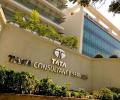
Tata Sons has pocketed Rs 11,164 crore by tendering 24.81 million shares in the Rs 18,000-crore share repurchase programme by the group's flagship firm Tata Consultancy Services (TCS). State-owned insurer Life Insurance Corporation (LIC) tendered 1.17 million shares to take home Rs 528 crore. Small shareholders - those holding shares worth up to Rs 2 lakh - tendered 25.3 million shares in the buyback, 4.22 times the 6 million shares reserved for them in the buyback.

Mutual funds (MFs) are investing in more stocks despite the recent volatility. The industry invested in 824 companies across the listed universe as of October, according to primemfdatabase.com. The S&P BSE Sensex hit its all-time high of 62,245 that month. The index has since corrected to 57,864, around 7 per cent below the peak.

Jail inmates produced goods generating gross sales worth Rs 223.4 crore in 2020, according to the government's annual Prison Statistics India report. The amount ranks at 496th place if compared with the latest net sales numbers of S&P BSE 500 companies, reports Sachin P Mampatta.

Once stability returns to the secondary market, companies that have obtained approval from Sebi will start tapping the market.


There is widening gap between what the government's premier retirement fund makes on its investments and what it offers to employees. The Employees' Provident Fund Organisation (EPFO) makes the bulk of its investments in government-related securities. In other words, it lends to central and state governments and related entities. The interest it gets from these instruments is largely what it uses to pay interest to its subscribers.

Indians spent more on foreign investments during the past 12 months than they have since at least 2012.

The Securities and Exchange Board of India (Sebi) has cleared the draft red herring prospectus (DRHP) of the state-owned Life Insurance Corporation of India (LIC). According to investment banking sources, the so-called final observations were issued by the market regulator on Tuesday evening. Following the market regulator's nod to the IPO papers, the insurer can launch its share sale. However, LIC may not launch its IPO immediately given the current volatile market conditions.

The National Stock Exchange (NSE), which is once again in the eye of a storm due to the co-location scandal, has said it has taken several transformational steps in the past few years on the regulatory, technological, and surveillance fronts to help improve stakeholder experience and to protect investors. Senior officials of the exchange briefed the media over the steps the exchange has taken on various fronts following changes at the helm with former managing director and chief executive officer Chitra Ramkrishna's ouster in December 2016. "Over the last few years, we have been looking to modernise and transform the entire value chain of technology.

The mysterious Himalayan 'yogi' who allegedly advised Chitra Ramkrishna, former managing director and chief executive officer of the National Stock Exchange (NSE), on important matters of the bourse could be none other than Anand Subramanian, according to a letter written by former NSE chairman Ashok Chawla to the Securities and Exchange Board of India (Sebi). Subramanian was group operating officer of the NSE and advisor to Ramkrishna during 2015-16. He joined as chief strategic advisor in April 2013.

The National Stock Exchange (NSE) has got into firefighting mode to control the reputational damage caused by the Securities and Exchange Board of India's (Sebi's) order against its former managing director and chief executive officer Chitra Ramkrishna and others. According to sources, the exchange's management over the past one week has met several key stakeholders, including officials in the finance ministry and Sebi, major shareholders, and trading members, trying to distance itself from the controversy. The exchange plans to hold more meetings in the coming week to ensure that trading volumes and confidence in the bourse don't get impacted, they added.
 © 2026 Rediff.com - Investor Information - Advertise with us - Disclaimer - Privacy Policy - Sitemap - Feedback - About us - Terms of use - Grievances